

Expanding Globally with High-Precision Manufacturing: FINECS Vietnam's Strength in Market Development
Translated and adapted from EMIDAS Magazine (original Japanese article).
https://emidas-magazine.nc-net.com/project/9808/
Based in VSIP 1 (Vietnam-Singapore Industrial Park 1) in Binh Duong Province, southern Vietnam, Finecs Vietnam is a high-precision component manufacturer specializing in precision pressing and machining. Established in 2011, the company has operated as an external-demand-oriented production base, running the mass production of automotive sensor terminals in parallel with custom single-item processing, with exports accounting for approximately 95% of its shipments. Its customer base extends beyond Japanese companies to a global network including Europe and North America. We spoke with President Shinichi Ishida and Plant Manager Yoshihiro Nishiya to get a real-world look at the factory floor and operations of a company that continues to secure orders in a market with strict quality demands.

President Shinichi Ishida
An External-Demand Order Base Expanded Through Three Pillars
The company's business consists of three core pillars:
First is metal processing via progressive stamping. Terminals incorporated into special automotive sensors are manufactured in Vietnam and shipped entirely overseas. Destinations span three directions—China, Thailand, and South Korea via Japan—with this sector accounting for about 70% of sales.
Second are machined parts. Combining machining, grinding, and electrical discharge machining (EDM), operations focus on high-mix, low-volume orders finished piece-by-piece according to blueprints. Applications range widely across industrial equipment, semiconductor inspection devices, and smartphone inspection equipment, while destinations expand beyond the US and Europe to Russia, Mexico, and Costa Rica.
Third is trading company functions. This is pass-through sales supplying OEM connectors and heading terminals manufactured by the Japanese headquarters (Toyama Prefecture) to Southeast Asia. Handling hundreds of product groups produced by heading machines, this role also serves to showcase the company's technological domains to the market. Although the scale at this stage is not large, it is positioned as route-to-market formation that anticipates future logistics volume increases and links to shifts toward local production.
Behind the expansion into Vietnam and the establishment of a factory in the south was an encounter back in Japan.
"Our headquarters has accepted Vietnamese technical intern trainees since 2008," says Plant Manager Nishiya. "The starting point was that the current chairman trusted the character and diligence of the Vietnamese people, compounded by the fact that many of the trainees hailed from the southern region. While there are several large industrial parks within Ho Chi Minh City, many areas are originally swampland with weak ground, which we found unsuitable for our stamping business. Therefore, after searching for solid land, we arrived at VSIP 1 in Binh Duong Province."
The company has built a business structure rooted in external demand. Stamping products are 100% exported, and 60% of machined parts are also destined overseas. Including those for Export Processing Enterprises (EPEs), about 95% of total shipments involve export-related documentation. Operating under a Non-EPE corporate form, the company has established a system to flexibly respond to projects on a case-by-case basis without being bound by market classifications. Automotive applications account for roughly 70% of sales, with the remaining 30% handled by industrial equipment processing—a framework covering the market through the dual axes of mass production and single-item production.
President Ishida took up his post in November 2020, right in the middle of the COVID-19 pandemic. Immediately after assuming office, he experienced quarantine measures, and in July 2021, a lockdown went into effect across all of Ho Chi Minh City. The lockdown coincided with the phase of getting business operations moving, significantly restricting factory operations. Initially, Vietnam was viewed as a country that had successfully suppressed infections, but due to high population density, infections rapidly expanded, leading to a situation where outings were restricted across entire cities.
"Employees could not leave their homes, and to continue production, we had no choice but to premise operations on a life of isolation inside the factory," says President Ishida. "Pursuant to government instructions, lodging inside the factory was permitted, and about 40 of our roughly 80 employees at the time brought in beds, continuing operations while sleeping and living on the premises without stepping outside for about three months."
Although operations took place under an environment where coming and going outside the site was strictly restricted, this experience led to a strengthening of frontline solidarity and an enhancement of problem-solving capabilities.
Pre-pandemic sales centered on a style of visiting client sites and communicating technical capabilities and responsiveness face-to-face. As travel restrictions made visits difficult, the corporate website proved its worth as a substitute for face-to-face engagement. Because it had been prepared right before the lockdown, the business content and strengths could be presented systematically, leading to an increase in overseas inquiries and a gradual recovery in orders. Today, most new customers come through the website, growing into a foundation that underpins sales activities.
Looking back at the evolution of the business, precision component machining since the opening and the progressive stamping business launched in 2020 are the current mainstays. The surrounding environment has also changed. At the initial entry, local procurement of materials was difficult, and for several years operations depended on imports from Japan; now, however, a system is in place where trading companies within Vietnam stock Japanese materials, making local procurement possible. After comparing and verifying steels from various countries for mold steel, the company adopted Japanese materials due to advantages in quality, such as minimal hardness variation.
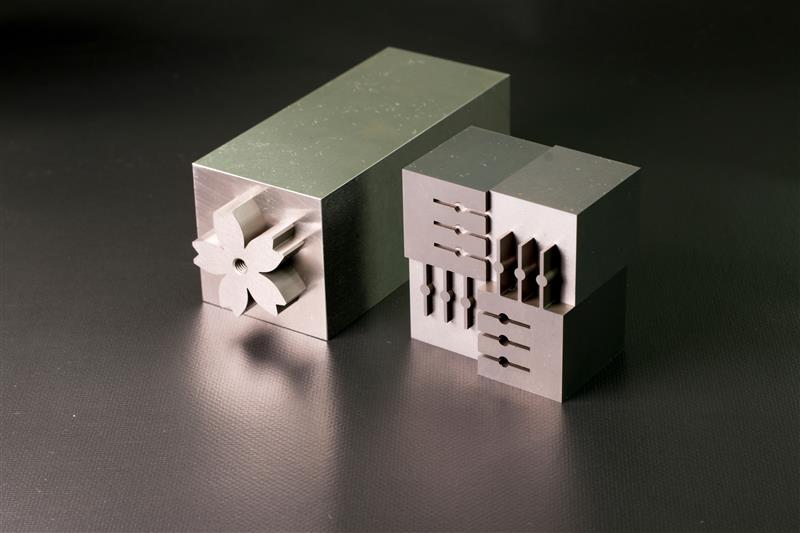 Precision Component Machining 1
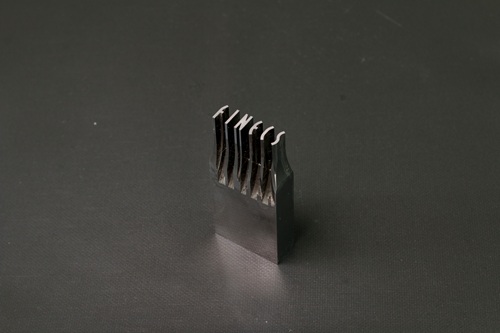
Precision Component Machining 2
Human Resource Circulation and Quality Control Connecting Japan and Vietnam
Human resource development and the transfer of technology form the bedrock of the company's competitiveness. The Japanese headquarters has long accepted Vietnamese technical intern trainees. Beyond that, it now focuses on securing high-level human resources, such as hiring university graduates from Vietnam as headquarters engineers. The vision is for individuals who gain 5 or 10 years of experience in Japan to eventually play a leading role on the ground at the Vietnamese base.
Furthermore, leveraging internal personnel transfer systems, employees at the Vietnamese factory are given opportunities to participate in multi-year training programs at headquarters. This initiative is designed for them to demonstrate skills, technology, and management capabilities upon returning to post. For a company handling fields requiring high precision, skill transfer and the maintenance of management standards are the foundations that guarantee quality, and frontline leadership roles are assumed by those with practical training experience in Japan.
Regarding the characteristics of Vietnamese human resources, Mr. Ishida notes, "Their strength lies in properly following established rules." At the frontline worker level, there is a strong tendency to adhere strictly without deviating from procedures. Meanwhile, at the manager level, besides rule adherence, individuals are required to make independent judgments based on challenges and formulate countermeasures. Compared to Japanese managers, there is also a tendency to wait for top-level instructions, making the elevation of judgment according to roles a frontline theme.
Vietnam exhibits high labor mobility. While various companies attempt to create appeal through employee benefits and company trips, measures tend to be uniform, and retaining talent through those alone is not easy. The company places high-precision processing—a high-value-added kind of work itself—at the forefront of its appeal. The core of differentiation is anchored in the realization that employees handle difficult machining and experience the satisfaction of having their results chosen by customers around the world.
Quality control is strictly driven around the automotive high-precision stamping business. What is handled is not general copper material, but nickel alloy pressed terminals, resulting in heavy mold wear. Short inspection cycles and meticulous management are indispensable for maintaining constant quality. Because damage to molds reaches about 10 times that of general materials and lifespan drops to about one-tenth, condition monitoring and quality checks are implemented at high frequencies. On-site, management methods equivalent to those of the Japanese headquarters are adopted, running "Five Management Boards" (or Five Major Management Boards) that visualize quality and cost using five indicators based on Toyota Motor Corporation's guidance. SAP has been introduced as the core system, and a system has been established to make judgments in coordination with the Japanese side—tackling technical challenges that are difficult to handle locally alone—by maintaining a constant connection with the Japanese headquarters via Teams.
The other pillar of the technological foundation is Plant Manager Nishiya. Holding a Japanese national grinding certification, he has been stationed since the factory's launch in 2011 and has guided the frontline for about 15 years. The accumulation of many years of technical guidance supports current high-precision machining.
In terms of technology transfer, education premised on cultural and language differences is indispensable. "Bringing in the same mindset as Japan as-is will not convey it," says Plant Manager Nishiya, emphasizing an attitude of teaching repeatedly while respecting Vietnamese culture. Even when understanding is insufficient due to language barriers, replies of "Understood" are frequently given, making it difficult to cement understanding through a single guidance session. Operations are run by factoring in repeated teaching while checking progress.
Supporting these efforts is "Visual Management" (Mieruka).
"Items that can be quantified are shown in numbers, graphed, and further organized into visually graspable forms such as color coding," says President Ishida. "By adopting color management—where green means normal and red means abnormal—we can grasp situations without relying on language. I realize that the visual management techniques cultivated through Japanese improvement activities function effectively not just in Vietnam, but across all overseas factories. Through such mechanisms, we maintain the reproducibility of quality and technology across cultural and language barriers."
 Mold Parts
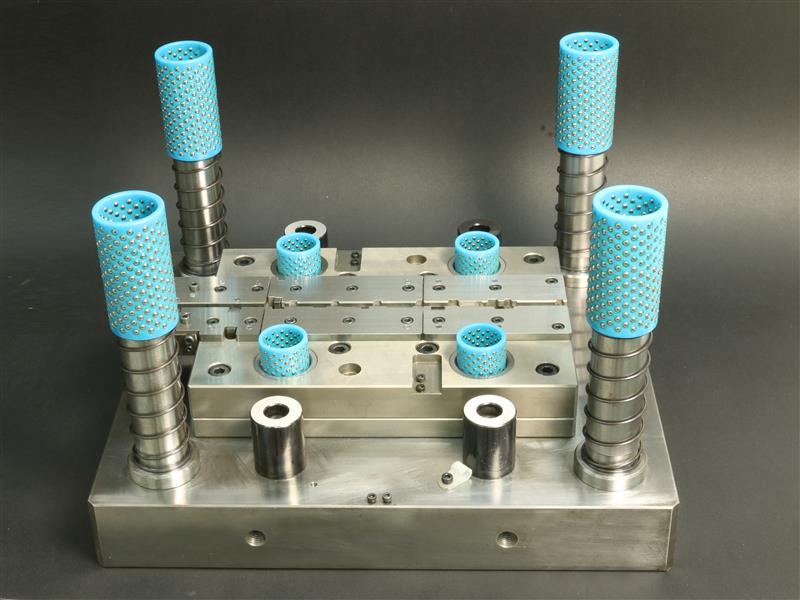 Metal Stamping Dies
Order Fields Expanding to Europe and North America, Building Trust Through Precision and Responsiveness
In the mold field, the company also handles so-called "sales molds" (custom-built molds). A system has been established to consistently handle everything from design to mold manufacturing and adjustment upon receiving product drawings from customers. Corresponding fields center on electronic components, semiconductors, and automotive, extending to lifestyle-related products for Western companies. In addition to sanitary goods like toothbrushes and razors, the company also produces stamping molds for jewelry. The policy is to accept orders across sectors without limiting fields, taking on areas that the company can accommodate. For Europe, the company also does business with a French aerospace-related manufacturer, supplying peripheral equipment such as processing jigs, assembly jigs, and measurement jigs rather than mass-produced parts themselves. By switching roles depending on the application, the company has steadily expanded its customer base.
One starting point for expanding the customer base was responding to equipment trouble at local sites of Western manufacturers expanding into Vietnam. Appreciated for its track record of local response, the company began receiving similar requests from those companies' headquarters. Furthermore, those achievements were shared within the customers' global networks, spreading to U.S. and European bases within the same group, forming a pattern of chained orders.
Transactions with Western companies require prior supplier registration (vendor registration), after which orders are placed from various bases through group-common purchasing systems. There are also cases where purchasing personnel at each base reference this and place direct orders. In recent years, Western companies have advanced into Southeast Asia, and moves to find outsourcing destinations for precision processing have become active, increasing inquiries to the company via the web.
On the other hand, inquiries from Japanese companies are not as numerous as those from the West. Amid a lingering underlying view in some quarters that Vietnam is a base handling low-cost assembly or mass-produced goods with low precision requirements, it can be hard to recognize as an outsourced destination for high-precision processing. Therefore, consultations from Japanese companies center on confirming whether precision and quality can be maintained at levels equivalent to Japan, and whether the factory environment affects quality. The company has built trust through the accumulation of verification on a case-by-case basis by demonstrating a track record of high-precision processing, a strict quality control system, and a well-maintained factory environment.
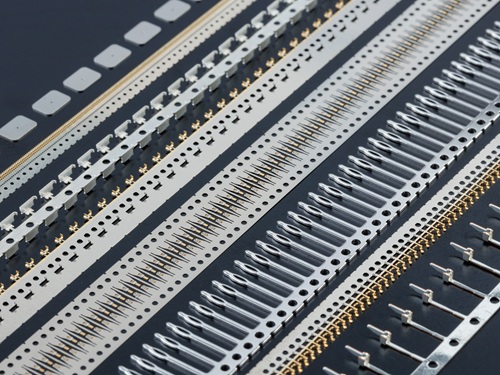
Precision Stamped Terminals
Global Optimization Centered on Vietnam
President Ishida notes that life in Vietnam is comfortable. The towns feature stores just like in Japan, and finding meals is hassle-free. There are also multiple hospitals with Japanese doctors. While Western postings often come with limited Japanese medical institutions and lingering anxieties regarding diet and medical care, such worries are relatively minor in Vietnam. The climate is also warm throughout the year, stably maintaining temperatures around 33 degrees Celsius, putting relatively little strain on the body.
Turning to the business environment, Vietnam maintains vibrancy. Even as cautious views spread in neighboring countries, many companies in Vietnam are increasing performance, and it is not uncommon to anticipate increased revenues in the following fiscal year. Although labor costs have risen significantly over the past decade, the appeal as a manufacturing base remains high. Currently, the company maintains competitiveness by taking on labor-intensive, high-value-added processing and accepting troublesome work that tends to be shunned in Japan. While considering the introduction of automation and differentiation strategies in anticipation of a phase where labor costs eventually rival those of other countries, many business opportunities are still anticipated in Vietnam, where manufacturing accumulation and market expansion continue.
At the same time, for Japanese small and medium-sized manufacturers considering expansion into Vietnam, the importance of advance preparation is also pointed out. On the production side, there is the difficulty of material procurement; on the business side, the burden of legal compliance such as tax and labor matters is heavy. Under a socialist system, the impact of national decision-making is strong, and dealing with institutional changes often takes time. In import and export, the interpretation of HS codes (international item classification codes) may not be uniform even for the same item, leading to fluctuating judgments. A clear-eyed assessment of the cost structure is indispensable, as labor costs can have high growth rates despite looking inexpensive at first glance, and living expenses can pile up beyond expectations.
Coping with such systems is difficult for a company to handle entirely on its own, making cooperation with consultants important. Countermeasures are advanced by maintaining radar to continuously acquire updated information on laws and regulations while utilizing networks such as the Japanese Chamber of Commerce and Industry. Rather than leaving matters entirely to local staff, an attitude where the company side also understands the systems is required. Horizontal connections among Japanese companies also naturally arise from commonalities like hobbies, hometowns, or universities, functioning as venues for information exchange. Understanding accuracy is enhanced by utilizing Japanese-centered consultants, receiving explanations of key points in Japanese, and establishing a system where local staff handle practical operations.
Future prospects place the axis on optimization across the entire globe. With population decline and labor shortages progressing in Japan, a system of manufacturing exclusively domestically has its limits. Amid this, building on the track record of high-precision processing cultivated in Vietnam, the company will advance the transfer of products that have entered a mature stage in Japan to local production. Furthermore, looking toward the future, the company also keeps in view the production deployment in Vietnam of product groups that cannot be easily imitated by other companies, such as advanced stamping terminals that can only be handled in Japan.
Management of the production floor is already centered on Vietnamese staff, and a system where daily manufacturing is run by local human resources is steadily falling into place. On the other hand, in domains like new product development and design, the company envisions a framework where Japanese personnel continue to lead in designing products that serve as the face of Finecs, which are then manufactured and sold at the Vietnamese factory. By combining the technologies polished in Japan with human resources at the Vietnamese base, an optimal production allocation will be built across the entire group. Beyond that lies the next growth stage with Vietnam as an important base.
Phản hồi từ khách hàng
Liên hệ qua điện thoại
Thứ hai- Thứ 6 (Ngoại trứ ngày lễ) 9:00 - 17:00
Hãy liên hệ với chúng tôi cho bất kỳ câu hỏi nào
Nếu yêu cầu báo giá,nhấp vào dưới đây

Thứ hai- Thứ 6
(Ngoại trừ ngày lễ)
9:00-17:00
© Bản quyền thuộc công ty TNHH FINECS Việt Nam.